The cheapest thing you can do for your lawn.
Before you buy another bag of fertilizer, spend $20 on a UConn soil test. The results tell you exactly what your lawn is missing — and what it isn’t.
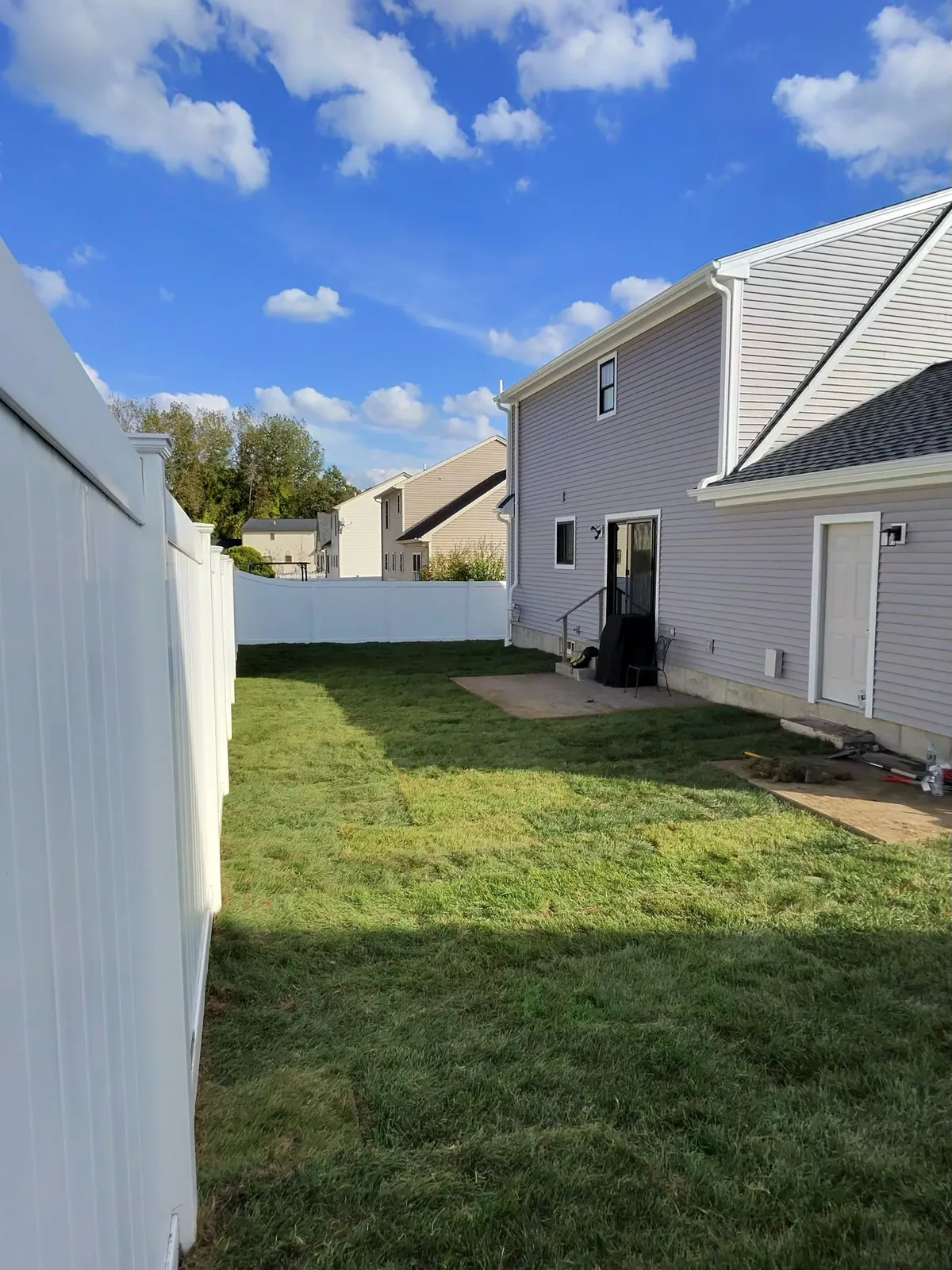
Before you buy another bag of fertilizer, spend about $20 on a UConn soil test. The results will tell you exactly what your lawn is missing — and, just as important, what it isn't. It's the cheapest, smartest move a Connecticut homeowner can make before dumping product on the ground.
Fertilizer without a soil test is just guessing
We see it every spring. A homeowner is frustrated with a thin, patchy lawn, so they grab whatever bag is stacked highest at the garden center and spread it. Next year, same problem, so they buy more. That's not a lawn program — that's throwing money at the ground and hoping.
Here's the thing about fertilizer: it only works if your grass can actually take it up. And whether it can comes down to your soil's chemistry, which you cannot see, smell, or eyeball. You can have plenty of nutrients already in the soil and a pH so far off that the grass can't touch any of it. Adding more won't fix that. A soil test is the only way to stop guessing and start treating the real problem.
Why New England soil fights you
Soils across Connecticut and the rest of New England tend to run acidic — low pH — thanks to our geology, our rainfall, and decades of pine and hardwood leaf litter. Turfgrass wants a pH somewhere around 6.0 to 7.0. Drop below that and the chemistry works against you.
At the wrong pH, nutrients get locked up in the soil in forms the grass roots can't absorb. So you spread nitrogen, phosphorus, and potassium, and a chunk of it just sits there unavailable — or washes off in the next rain into the storm drain, the wetlands, and eventually the Sound. You paid for it, the lawn never used it, and you've contributed to nutrient runoff that Connecticut is actively trying to reduce. Correcting pH first is what makes every dollar of fertilizer after it actually count.
At the wrong pH, the grass literally can't take up the fertilizer you're dumping on it. You waste the money and you pollute the runoff.
What the UConn test actually tells you
The UConn Soil Nutrient Analysis Laboratory in Storrs runs an inexpensive standard soil test — roughly $15 to $20 — that any homeowner can mail in. You don't need to be a farmer or hire anyone. For that price you get a report that covers the things that actually drive lawn health:
Soil pH, so you know whether you're acidic and by how much. Phosphorus, potassium, calcium, and magnesium levels, plus other nutrients. A read on organic matter. And — this is the part most people skip past — specific lime and fertilizer recommendations based on your numbers. It tells you how much lime to add to hit the right pH, and what nutrients you're actually short on, in real amounts. Not "use this bag." Actual guidance for your yard.
You can also add a screen for lead, and if you've got an older home or you're putting in a vegetable garden, do it. A lot of Connecticut houses predate the phase-out of lead paint and leaded gasoline, and that lead settles into the soil near foundations and along old driveways. It's worth knowing before your kids are playing on it or you're growing tomatoes in it.
How to take a sample that's actually worth reading
A soil test is only as good as the sample you send. One plug from one spot tells you about one spot. Your lawn isn't uniform, so you want a composite — a blended sample that represents the whole area. Here's how our crews do it:
- Grab a clean bucket and a trowel or a soil probe. No fertilizer residue, no rusty coffee can.
- Walk the lawn and pull 10 to 15 small plugs from spots spread across the whole area — not just the one bad patch. Zig-zag across it.
- Take each plug 3 to 4 inches deep. That's the root zone. Going too shallow or too deep skews the numbers.
- Drop every plug into the bucket and mix them together thoroughly. This blend is your composite sample.
- Spread the mixed soil on newspaper or a tray and let it air-dry. Don't bake it in the oven or the microwave — heat can throw off the readings.
- Scoop out the cup or so the lab asks for, bag it, fill out the form, and mail it in.
If you've got two areas that are genuinely different — a shady backyard and a full-sun front, say — sample and submit them separately. They'll likely need different treatment.
The crew's rule
Lime first, fertilizer second. If your pH is off, correct it before you spend a dime on nutrients — otherwise you're feeding a lawn that can't eat.
When to test
Fall is our favorite time to test, with early spring a close second. Testing in fall gives you your numbers before the growing season and, if lime is called for, time to put it down and let it work — lime is slow, and it can take months to move the pH. Early spring works too if fall got away from you.
You don't need to test every year. Once every three years or so is plenty for an established lawn, unless you're troubleshooting a specific problem or you've just done major work. Soil chemistry changes slowly, so annual testing is overkill.
What to do with the results
When the report comes back, resist the urge to do everything at once. Start with pH. If the test calls for lime, that's your first purchase, and it's usually a cheap one. Get the pH into range and you've unlocked the nutrients already sitting in your soil for free.
Then look at what's actually low and buy only that. If the report says your phosphorus and potassium are fine and you just need nitrogen, you don't need a fancy all-in-one blend — you need nitrogen. Matching the product to the deficiency is how a $20 test pays for itself many times over. You stop buying nutrients you already have, and you stop the runoff that comes with over-applying.
And if the report is confusing, call for help. Your local UConn Extension office and the soil lab itself are real, trustworthy resources staffed by people whose job is to help Connecticut homeowners read these numbers. That's what they're there for. Use them before you use the internet.
The bottom line
A soil test is the single cheapest thing you can do for your lawn, and it's the one step that makes everything after it work. For the price of one bag of fertilizer you find out exactly what your yard needs, quit wasting money on what it doesn't, and stop feeding runoff instead of grass. Test in the fall, lime before you fertilize, and let the numbers — not the biggest bag on the shelf — tell you what to buy.
Thinking about a project this season?
Free, no-pressure on-site quotes across Hartford County, CT.
Let's build something that lasts.
Hardscaping, landscaping and snow removal across Hartford County, Connecticut. Licensed (HIC.0703177) and fully insured — free quotes on every project.