Six questions to ask any hardscape contractor before you sign.
Base depth, warranty specifics, cleanup terms, insurance limits. The six questions that separate a 20-year patio from a three-year one.
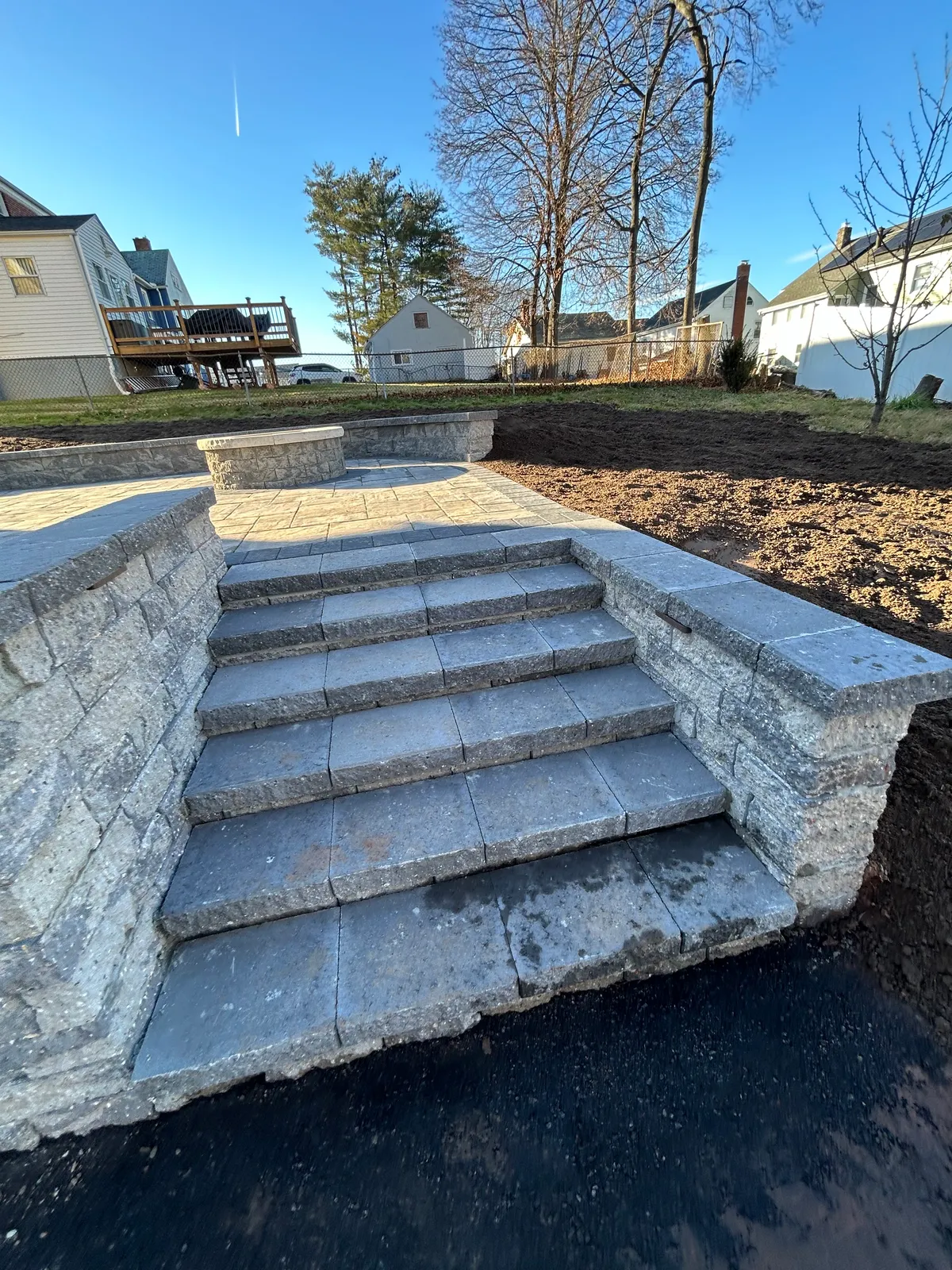
Everybody wants the low bid. We get it — a patio is real money, and when three contractors hand you three numbers, the smallest one is tempting. But the cheapest bid is almost never the cheapest patio. It's just the cheapest to build. Cut the base, skip the grading, hire day labor, and disappear when the warranty phone rings — that's how a number gets small. The questions below don't require you to be an expert. They just make the corner-cutters uncomfortable and give the honest builders a chance to show their work.
How deep is your base — and how do you compact it?
This is the single best predictor of whether your patio lasts twenty years or heaves apart in two. In Connecticut, the ground freezes, swells, and thaws every winter. The only thing standing between that movement and your pavers is the base underneath — and you'll never see it once the job is done, which is exactly why it gets shortchanged.
A good answer sounds specific. You want a real number for the depth of compacted crushed stone — typically six inches or more for a patio, deeper for a driveway — and you want to hear the word "lifts." Base isn't dumped in and tamped once; it's built up in thin layers, each compacted with a plate compactor, because you can't properly compact a thick pile all at once. Ask about geotextile fabric between the soil and the gravel, which keeps the two from mixing and mushing together over time.
- Red flag: a vague answer like "we put down a good base" with no number.
- Red flag: laying pavers over a thin layer of stone, or worse, straight over sand or dirt.
- Red flag: no mention of compacting in layers, or no plate compactor on the equipment list.
Are you a registered Connecticut Home Improvement Contractor, and are you insured?
Connecticut law requires anyone doing residential home improvement work to hold a Home Improvement Contractor registration. It's not a suggestion — it's the baseline for operating legally in this state, and it ties the contractor into the state's consumer protection framework. Any legitimate outfit will give you their registration without hesitation.
Insurance is the part that can cost you personally if you skip it. Ask to see proof of general liability insurance and workers' compensation. Here's why: if an uninsured worker gets hurt digging your base or running a saw on your property, the medical bill can land on your homeowner's policy — and on you. Liability coverage protects your property if something gets damaged. A real company carries both and can email you certificates the same day.
- Red flag: "I'll get you that later" that never turns into an actual certificate.
- Red flag: no workers' comp because "it's just me and my guys."
- Red flag: pressure to pay cash to keep it off the books.
You'll never see the base again once the pavers go down. That's exactly why the honest contractors will talk your ear off about it, and the cheap ones change the subject.
What exactly does your warranty cover, and for how long?
"Warranty" is one word covering two very different things, and you need both spelled out. There's the manufacturer's warranty on the pavers themselves — that comes from the company that made the stone and typically covers manufacturing defects, sometimes for decades. Then there's the workmanship warranty, which is the contractor standing behind their own labor: the base, the grading, the installation. That's the one that matters most, because most patio failures are installation failures, not defective stone.
Get the length and terms in writing before work starts, and ask plainly what would void it. Some settling at the edges is normal, but a workmanship warranty should cover the base failing, pavers sinking, or the surface heaving unevenly. A confident builder puts it in writing and explains the difference without getting defensive.
- Red flag: only the paver manufacturer's warranty, nothing on their own labor.
- Red flag: a verbal promise with nothing on paper.
- Red flag: fine print so broad it voids coverage for almost anything.
How will you handle drainage and grading?
Water is what kills hardscapes. Not weight, not use, not time — water. Water that pools on the surface, gets under the base and freezes, or runs toward your foundation instead of away from it. A beautiful patio with bad drainage is a countdown clock, so how a contractor answers this tells you whether they're thinking past the pretty photo.
You want to hear about slope — the surface should be pitched slightly away from your house so runoff moves off it, not toward the foundation. Ask where the water goes and whether they'll re-grade to make that happen. On tricky lots they may mention drainage aggregate, channel drains, or where downspouts tie in. The point isn't that you need all of those; it's that they've clearly thought about where a heavy rain ends up.
- Red flag: a dead-flat patio with no mention of pitch or slope.
- Red flag: no plan for runoff, or water directed toward the house.
- Red flag: "it'll drain fine" with no look at how your yard actually sits.
Who is actually on my job — your crew or subcontractors?
There's nothing automatically wrong with subcontractors, but you deserve to know who's holding the trowel. It comes down to consistency and accountability. When the same crew that quoted the job builds it, the standards you talked about at the kitchen table actually make it to the backyard. When the work gets handed to whoever's available, details get lost — and if something goes wrong later, you want one person to call, not a finger-pointing match between the salesman and the subs.
Either answer is fine, as long as it's straight. "Our own crew, same guys start to finish" is great. "We sub out the excavation but our people do all the paver work and I'm on site" is honest and workable too. What you're listening for is a clear chain of accountability and a name attached to your project.
- Red flag: dodging the question or not knowing who'll show up.
- Red flag: the person you built trust with disappears once the deposit clears.
- Red flag: a rotating cast with no single point of contact.
The crew's rule
Never pay for more than you can see. Big money should follow completed work, not promises. If a contractor wants most of the job's cost before a shovel hits the ground, that's your signal to slow down — an established company has the resources to buy materials and get moving on a reasonable deposit.
What's the payment schedule, and how are cleanup and change orders handled?
The money should track the work. Be cautious about any large upfront deposit — a modest one to secure your spot and cover material is normal, but paying the bulk before the job starts leaves you with no leverage and the contractor with no reason to hurry. A fair schedule ties progress payments to milestones: a deposit, a payment when the base is in, the balance when the job is finished and you've walked it together and signed off.
Cleanup and change orders are where surprises hide. Ask directly: does the price include hauling away the excavated dirt, old concrete, and debris, or is that extra? A full-service crew leaves your yard clean. And because no dig goes perfectly — buried stumps, unexpected ledge, a soft spot that needs more base — ask how surprises get priced. You want a written change-order process, so any addition comes with a number and your signature before it lands on the final bill.
- Red flag: a demand for half or more of the total before starting.
- Red flag: "cleanup" left vague, then a dumpster fee shows up at the end.
- Red flag: extra work done first and priced later, with no written approval.
The bottom line
None of these questions require you to know a thing about masonry. They just separate the contractors who build for the long haul from the ones counting on you not to ask. Depth and compaction, registration and insurance, a written warranty, a real drainage plan, a clear crew, and honest money terms — get straight answers on all six and you'll know exactly who you're dealing with. The right builder won't be annoyed you asked. They'll be glad you did.
Thinking about a project this season?
Free, no-pressure on-site quotes across Hartford County, CT.
Let's build something that lasts.
Hardscaping, landscaping and snow removal across Hartford County, Connecticut. Licensed (HIC.0703177) and fully insured — free quotes on every project.