Fall cleanup: rake, leave, or mulch in place?
Not every leaf needs a bag. Some feed the lawn, some smother it, and the difference is mostly species and depth. Here’s our working rule of thumb.
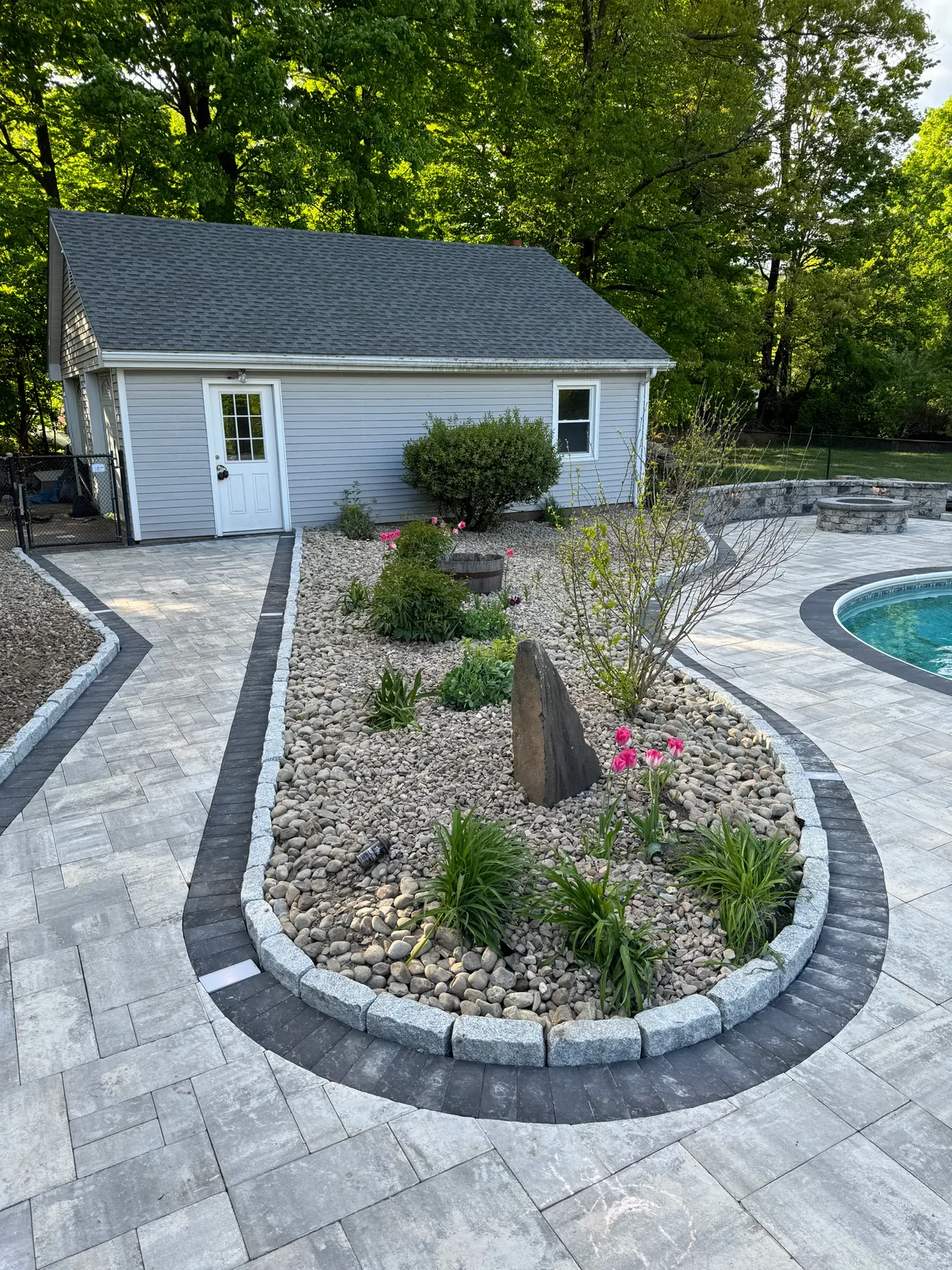
Not every leaf needs to go in a bag. Some are food for your lawn, some smother it dead, and the difference comes down to two things: what tree dropped them and how deep they're piled. After enough falls working yards across Hartford County, we've boiled it down to three buckets — mulch in place, leave it, or rake it out. Here's how we sort them.
The three-bucket system
People treat fall cleanup like it's all one job: get every leaf off the property and into bags. That's a lot of wasted weekends, and honestly it's not even good for the yard. Leaves aren't the enemy. A thin scatter of the right ones is one of the best free amendments your soil will ever get. The trick is knowing which pile does what.
Every leaf on your property falls into one of three categories. Once you can read them, the whole chore gets faster and your lawn comes out ahead.
Bucket 1: Mulch in place
A thin layer of leaves on the lawn doesn't need to go anywhere. Run the mower over it — ideally a mulching mower or a mower with the bag off — and it chops the leaves into confetti that settles down between the grass blades. Over the winter that material breaks down and feeds the soil. You're basically composting in place, and it beats anything you'd buy in a bag.
This works best with thinner, drier leaves — the kind that crumble when you step on them. Around here that's a lot of the smaller-leaf trees and anything that's been sitting dry for a day or two. Mulch-mow them and you've turned a chore into a soil treatment.
Do it while the layer is still light. If you wait until the whole yard is buried, the mower just pushes a wet wall of leaves around and you've missed the window.
Bucket 2: Leave it
Not every part of your property is lawn, and the areas that aren't don't need to be spotless. In your garden beds, along fence lines, and across the back edge of the property, a layer of leaves is doing real work. It shelters overwintering pollinators and the beneficial insects that keep your yard's ecosystem in balance — a lot of them spend the winter tucked into leaf litter. That same layer insulates the crowns of your perennials against the freeze-thaw swings we get through a Connecticut winter.
So resist the urge to strip the beds bare. Rake the leaves off the lawn if you need to, but let a decent layer stay put where it's not smothering turf. It's free mulch, free insulation, and free habitat, and it costs you nothing but the restraint to walk past it.
If you can still see grass through the leaves, mulch-mow them. If it's a solid blanket you can't see through, get it off before the snow comes.
Bucket 3: Rake and remove
Now the leaves that have to go. Heavy, wet mats — especially the big broad leaves off Norway maples and oaks that pile up thick and slick — will smother and kill your turf over the winter. Grass under a solid wet blanket can't breathe or catch any light, and by the time the snow melts you've got dead patches and matted, moldy turf underneath. That's exactly the setup snow mold loves: leaves trap moisture against the grass, snow sits on top, and come spring you've got gray or pink fungal patches to deal with.
The other place leaves have to come off is anywhere hard. Get them off your patios, walkways, and driveway — and not just because they look messy. Wet leaves sitting on pavers leach tannins that stain the stone, and those stains are a pain to get out. Wet leaves are also genuinely slippery, and a slick walkway is how someone ends up on the ground. Hardscape gets cleared, period.
The depth test
You don't need to agonize over species every time. Use your eyes. Bend down and look at the lawn:
- Can you still see grass poking through the leaves? That's a thin layer. Mulch-mow it and move on.
- Is it a solid blanket you can't see grass through? That's too much to mulch. Rake it, blow it, or bag it — get it off the turf.
The species stuff mostly takes care of itself with this test. Small dry leaves rarely build a solid blanket; big wet maple and oak leaves almost always do. Trust the depth.
The crew's rule
See grass, mulch it. Can't see grass, remove it. And whatever else you do, clear every leaf off the pavers and walkways before it stains and before it turns slick.
Timing: do it in stages
The single biggest mistake is waiting for every leaf to fall and then doing it all in one brutal weekend. By then the early leaves have already matted down, gotten wet, and started killing grass while you waited.
Do it in passes through the fall instead. A light pass every week or two keeps the layer thin enough to mulch-mow, which is far less work than fighting one giant wet pile in November. Then make one real final pass before the first snow — get the lawn cleared and, most important, get everything off the hardscape. Whatever leaves are sitting on your walkways when the snow lands will still be there, stained and frozen in, come spring.
The bottom line
Fall cleanup isn't about erasing every leaf — it's about sorting them. Thin layers on the lawn get mulched in and feed the soil. Beds and back edges keep a layer for the insects and the perennials. Heavy wet mats and anything on hardscape gets removed before it smothers turf or stains stone. Read the depth, work in stages, and make one clean final pass before the snow. Do that and you'll spend fewer weekends bagging and still head into spring with a healthier lawn than the neighbor who hauled off every last leaf.
Thinking about a project this season?
Free, no-pressure on-site quotes across Hartford County, CT.
Let's build something that lasts.
Hardscaping, landscaping and snow removal across Hartford County, Connecticut. Licensed (HIC.0703177) and fully insured — free quotes on every project.