Mowing height is the most important setting on your lawn.
Cut too short and you invite weeds, heat stress, and shallow roots. Here’s the height we run in Connecticut — and why we raise the deck in July.
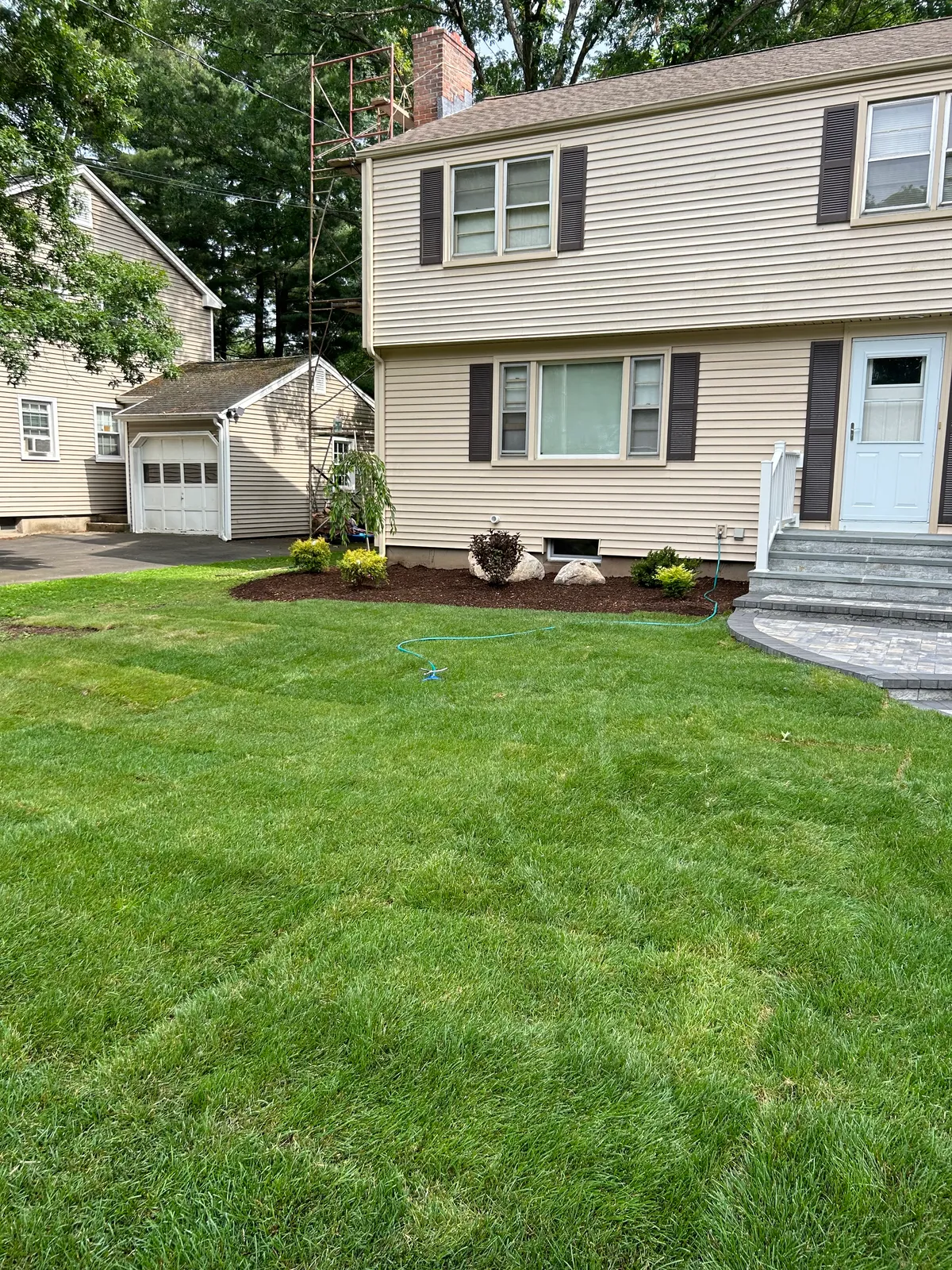
If you only get one thing right on your lawn this year, make it the mowing height. Not the fertilizer, not the sprinkler timer, not the bag of weed-and-feed from the hardware store. The height you set your mower deck decides how deep your roots go, how many weeds move in, and how well the grass holds up when a Connecticut July turns brutal. Cut too short and you're fighting the lawn all season. Cut it right and the lawn does the work for you.
Know what you're growing
Lawns here in Hartford County are cool-season grass. That usually means Kentucky bluegrass, tall fescue, perennial ryegrass, or some blend of the three. We sit in USDA zone 6, and these grasses are built for our climate — they love the cool, wet stretches of spring and fall and they struggle in the dead heat of summer.
That matters because cool-season grass behaves nothing like the Bermuda or zoysia you'd see down south. Those southern grasses spread low and get cut short. Ours wants to grow tall, and it punishes you when you scalp it. So the first rule of mowing in Connecticut is simple: you're not growing a putting green. You're growing a tall, dense stand of grass that can shade its own roots.
The height we actually run
For a cool-season lawn in this state, we mow tall — roughly 3 to 4 inches. Most homeowners set their deck at least one full notch lower than they should. If your mower has a dial or a lever, that 3-inch mark is your everyday floor, not the middle of the range.
Then in the July and August heat, we raise the deck to the top of that range — right around 4 inches. When the weather turns hot and dry and the grass slows down, that extra inch of blade is what keeps the lawn alive. Taller grass in summer is not laziness. It's the single best thing you can do to protect the lawn through the worst weeks of the year.
Here's why the height does so much heavy lifting:
- Deeper roots. The height of the blade above the soil roughly mirrors the depth of the roots below it. Taller grass builds a deeper, tougher root system that can reach moisture when the top few inches of soil bake dry.
- Shaded soil. A tall canopy keeps the ground underneath cooler and holds moisture longer. Cut short and you expose bare, hot soil that dries out fast and cooks the crown of the plant.
- Fewer weeds. Crabgrass and most weed seeds need sunlight hitting the soil to germinate. A thick, tall stand of grass shades that soil and never gives them the light. You suppress crabgrass with mowing height before you ever reach for a pre-emergent.
Scalp the lawn short and you flip every one of those in the wrong direction — shallow roots, hot exposed soil, and an open invitation to weeds and heat stress. That's the whole promise of the teaser in one sentence.
The grass you leave standing is what protects the grass you can't see.
The one-third rule
You can't just let the lawn grow to your knees and then take it down to 3 inches in one pass. That kind of scalping shocks the plant, browns it out, and opens the soil right back up. The rule we live by is this: never remove more than one-third of the blade in a single mow.
So if you're keeping the lawn at 3 inches, you mow when it hits about 4½ inches — taking off roughly an inch and a half. If it got away from you and it's 6 inches tall, don't drop straight to 3. Take it down in stages, a few days apart, until you're back to target. It's slower, but the grass never gets shocked and it never turns yellow on you.
A sharp blade, every time
Height gets all the attention, but a dull blade will undo a lot of good work. A sharp blade slices the grass clean. A dull one tears and shreds it, leaving a ragged, whitish tip that frays and browns within a day.
Those torn ends aren't just ugly. Every ripped tip is an open wound, and open wounds are where lawn disease gets in. A clean cut heals fast; a shredded one sits there stressed through the humid stretch when fungus is already looking for a way in. Sharpen your blade at least a couple of times a season. If the tips look frayed instead of clean the day after mowing, your blade is telling you it's time.
Leave the clippings
Bagging every mow and hauling clippings to the curb is wasted effort and wasted nutrients. As long as you're mowing on schedule and not removing huge clumps at once, leave the clippings on the lawn. This is called grasscycling, and it works.
Grass clippings are mostly water. They break down fast and feed nitrogen right back into the soil — free fertilizer you already paid for once. They do not cause thatch; that's an old myth. The only time to bag is when the grass got too long and you're dropping heavy clumps that would smother the lawn. Otherwise, let them fall.
The crew's rule
Mow high, mow sharp, mow dry, and put the clippings back. Get those four right and you've solved most of what people pay us to fix.
Mow with the season, not the calendar
The biggest mistake we see is mowing on a fixed weekly schedule all season long. Cool-season grass doesn't grow at a steady rate — it surges and stalls, and your mowing should follow it.
- Spring: The grass is growing fast and loving the cool, damp weather. You may need to mow more than once a week to stay inside the one-third rule. Keep up with it.
- Summer: As the heat sets in, the lawn slows down and may go semi-dormant. Back off. You might only mow every week and a half or two weeks. This is exactly when the deck goes up to 4 inches. Mowing a stressed, dormant lawn short in August is how you kill it.
- Fall: The weather cools, the grass wakes back up, and growth picks up again. Resume a tighter schedule. Fall is the most important growing season for cool-season lawns — this is when the grass recovers and builds up for winter.
Let the grass tell you when to mow. If it's grown a third past your target height, it's time. If it hasn't, the mower can stay in the shed.
Mow dry, not wet
Wait for the lawn to dry before you mow. Wet grass clumps and mats instead of standing up for a clean cut, so the blade tears more and the mower leaves streaks and rows behind. Wet clippings clog the deck and fall in heavy clumps that smother the grass beneath them.
There's a disease angle too. Mowing wet grass drags fungal spores across the lawn on your tires and deck, spreading problems you didn't have yesterday. Give it a few hours after the dew burns off or a rain passes. The cut is cleaner and the job is easier on you and the machine.
The bottom line
Set the deck at 3 inches as your floor and raise it toward 4 when July and August turn hot. Never scalp more than a third at once, keep the blade sharp, leave the clippings, follow the grass through the seasons, and mow when it's dry. None of it costs extra — it's the same mowing you were already doing, just done right. Do that, and your lawn grows deeper roots, shades out weeds on its own, and shrugs off the Connecticut summer instead of surrendering to it.
Thinking about a project this season?
Free, no-pressure on-site quotes across Hartford County, CT.
Let's build something that lasts.
Hardscaping, landscaping and snow removal across Hartford County, Connecticut. Licensed (HIC.0703177) and fully insured — free quotes on every project.